Author: Automotive expert specializing in Chinese vehicles, with hands-on experience in diagnostics, maintenance, and real-world operation of ICE, hybrid, and electric models.
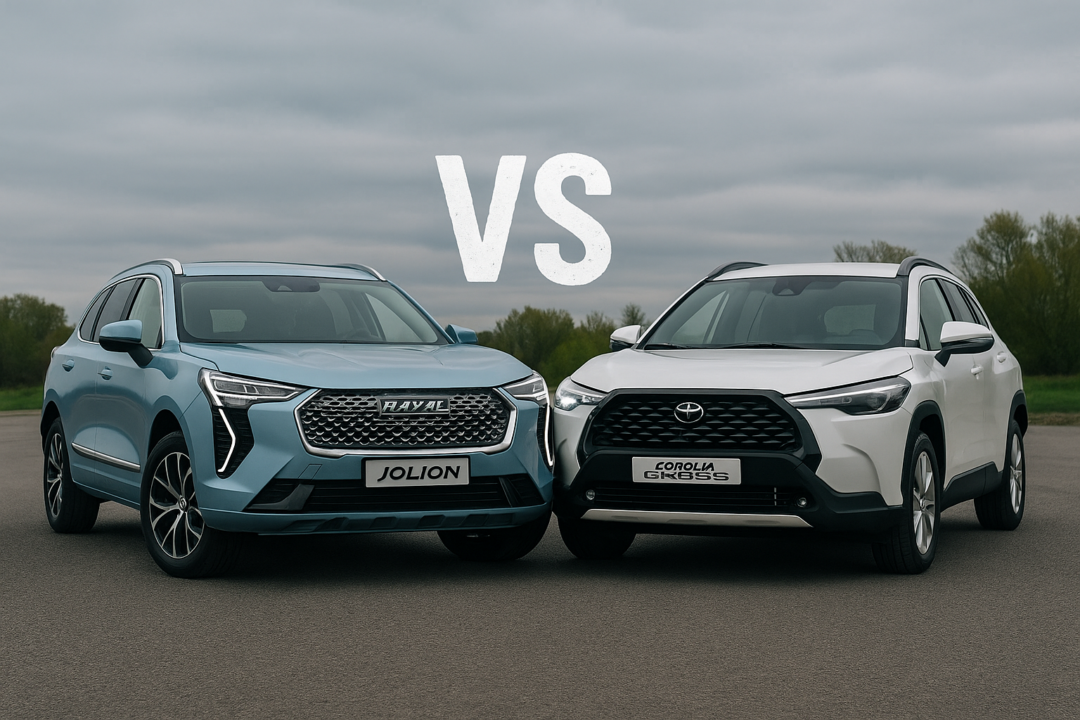
Chinese automaker Haval has been making waves globally with its affordable and tech-rich vehicles, and the Jolion is no exception. Meanwhile, Toyota’s Corolla Cross offers the trusted reliability and efficiency the Japanese brand is known for. But in 2025, as car buyers demand more features for less money, which of these compact SUVs delivers the better overall value?
Let’s break it down across multiple categories, including design, interior quality, tech and features, performance, safety, and total ownership cost.
The Jolion brings a bold and modern aesthetic with a large front grille, dynamic LED lighting, and sharp body lines. It looks more like a mini luxury SUV than a budget compact crossover. Its proportions are slightly more aggressive, with sporty touches like dual exhaust tips (on higher trims) and 18-inch alloy wheels.
Toyota Corolla Cross
The Corolla Cross opts for a more conservative and practical design. While its styling is clean and consistent with Toyota’s global lineup, it doesn’t turn heads like the Jolion. It does offer good ground clearance and a rugged appeal, but lacks the flair younger buyers might look for.
✅ Winner: Haval Jolion – more distinctive and upscale styling.
2. Interior & Comfort
Haval Jolion
Haval offers a surprisingly premium cabin with a floating touchscreen, digital instrument cluster, ambient lighting, and stitched leather-like materials on upper trims. Cabin space is generous, especially for rear passengers. However, material quality can be inconsistent on lower trims.
Toyota Corolla Cross
Toyota focuses on function over flash. The interior is ergonomic, user-friendly, and built with durable materials. It may feel less luxurious but offers better long-term wear and simpler controls. Rear seat space is slightly tighter compared to the Jolion, especially in legroom.
✅ Winner: Draw – Jolion is flashier, Corolla Cross is more durable and ergonomic.
🚗 Special Deals & Discounts
Latest prices on vehicles, spare parts and dealer promotions.
Depending on the market and trim, the Jolion offers a 10.25- or 12.3-inch touchscreen, Apple CarPlay, Android Auto, wireless charging, a 360-degree camera, and a full digital instrument panel. The interface is modern but can be laggy at times.
Toyota Corolla Cross
The Corolla Cross comes with an 8-inch touchscreen, wireless Apple CarPlay/Android Auto, and a digital display on higher trims. Toyota’s system is more stable and easier to use but lacks the high-tech wow factor of Haval.
✅ Winner: Haval Jolion – better tech offering for the price.
4. Performance & Fuel Efficiency
Haval Jolion
The Jolion is powered by a 1.5L turbocharged engine (143–150 hp depending on market) paired with a 7-speed dual-clutch transmission (DCT). It offers decent acceleration but can feel hesitant in stop-and-go traffic. Fuel consumption is around 7.5–8.5 L/100 km in mixed driving.
Toyota Corolla Cross
The Corolla Cross is available with either a 1.8L naturally aspirated engine or a hybrid system in most markets, delivering around 140–170 hp. The hybrid version shines with fuel economy as low as 4.5–5.2 L/100 km, far superior to the Jolion’s.
✅ Winner: Toyota Corolla Cross – more efficient and smoother powertrain.
5. Ride Quality & Handling
Haval Jolion
It offers a comfortable ride with a soft suspension, which is ideal for city driving and poor road surfaces. However, handling isn’t as sharp, and body roll is noticeable when cornering.
Toyota Corolla Cross
The Corolla Cross offers a more balanced suspension setup. It delivers better composure during cornering and a slightly firmer but more controlled ride, especially at higher speeds.
✅ Winner: Toyota Corolla Cross – better driving dynamics overall.
6. Safety & Driver Assistance
Haval Jolion
Comes packed with advanced driver assistance features even in mid-tier trims, including adaptive cruise control, lane keep assist, blind spot monitoring, rear cross-traffic alert, and autonomous emergency braking. It has achieved high scores in regional safety tests (ANCAP, C-NCAP).
Toyota Corolla Cross
Toyota Safety Sense includes similar features: adaptive cruise, lane tracing assist, pre-collision warning, and blind spot detection. Its systems are polished and less intrusive than some of Haval’s semi-autonomous tech.
✅ Winner: Draw – both offer solid safety, but Toyota’s systems are more refined.
7. Pricing & Value
Model
Base Price (USD, approx.)
Top Trim Price
Haval Jolion
$18,000 – $20,000
~$25,000
Toyota Corolla Cross
$23,000 – $25,000
~$31,000
The Haval Jolion gives you more features for significantly less money. However, the Toyota Corolla Cross holds value better in the used market and offers cheaper long-term maintenance in some regions.
✅ Winner: Haval Jolion – unbeatable value for budget-conscious buyers.
Note: pricing varies significantly by market and local import duties. Check current local dealer pricing before making a purchase decision.
8. Reliability & Ownership Cost
Haval Jolion
As a newer entrant, long-term reliability data is still evolving. Some owners report issues with the DCT gearbox and infotainment system. Parts availability and service networks can be limited in some regions.
Toyota Corolla Cross
Backed by Toyota’s global reputation, the Corolla Cross benefits from a proven track record, widespread service support, and generally low maintenance costs.
✅ Winner: Toyota Corolla Cross – superior brand trust and support.
Choose the Haval Jolion if you want a tech-rich, stylish SUV with great value for money and modern features. It’s ideal for younger or first-time SUV buyers who prioritize design and equipment over brand legacy.
Choose the Toyota Corolla Cross if you value long-term reliability, better fuel efficiency, and resale value. It’s the safer bet for buyers who want peace of mind and don’t mind paying a premium.
❓ FAQ – Frequently Asked Questions
The Toyota Corolla Cross, especially in its hybrid version, is significantly more fuel-efficient. It averages between 4.5 and 5.2 L/100 km, while the Haval Jolion typically consumes around 7.5 to 8.5 L/100 km in mixed driving.
The Haval Jolion is a relatively new model in global markets. While it offers impressive features, some owners have reported issues with the DCT gearbox and infotainment lag. Long-term reliability is still under observation, and service support may vary by region.
The Jolion offers a softer suspension and better rear legroom, making it comfortable for city commutes. However, the Corolla Cross provides better maneuverability and slightly smaller dimensions, making parking and urban driving easier.
Yes, especially in terms of screen size, digital instrumentation, and onboard features. The Jolion offers a more premium feel with its large touchscreen, wireless charging, and 360-degree camera, which are usually limited to higher trims in the Corolla Cross.
The Toyota Corolla Cross holds its value better over time. Toyota’s reputation for reliability and a global service network make it a safer investment in the long term.
Both SUVs are equipped with modern active safety systems like adaptive cruise control, lane assist, and emergency braking. However, Toyota’s systems tend to be more refined and less intrusive during everyday driving.
The Haval Jolion is significantly more affordable. Its base price is around $18,000–$20,000, while the Toyota Corolla Cross starts closer to $23,000–$25,000, making the Jolion the better value option for buyers on a tighter budget.
Specifications and pricing reflect general regional trim ranges as of 2025 and may vary by market. Always confirm current figures with an official dealer before purchase.
Related Haval Jolion Articles
Looking for more information about Haval Jolion ownership, maintenance, troubleshooting, and vehicle settings? Explore our detailed guides, comparisons, and repair articles below:
Understanding your vehicle’s maintenance requirements, common issues, and advanced settings can help improve reliability, reduce ownership costs, and enhance your overall Haval Jolion driving experience.
Author: Egor Bespalov — Mechanical Engineer, 10 years of experience with Chery, AvtoMir Service, expert on Chinese cars. Writes about repair, diagnostics, and ownership experience of Haval, Chery, Geely, and Changan models.