Author: Automotive expert specializing in Chinese vehicles, with hands-on experience in diagnostics, maintenance, and real-world operation of ICE, hybrid, and electric models.
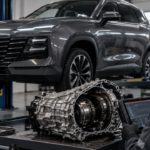
The Haval Dargo has become one of the more popular Chinese crossovers in the CIS region, thanks to its modern design, generous equipment list, and turbocharged engine. One question that comes up often among prospective buyers is how reliable its dual-clutch DCT transmission actually is. This article covers how the gearbox works, its most common problems and fault codes, real owner reviews, and how to extend its service life.
Unlike the “dry” dual-clutch units of earlier generations, a wet DCT is considered more durable and better suited to handling higher torque loads. That said, it still has its own quirks in everyday driving.
How does a DCT gearbox work?
A DCT (Dual Clutch Transmission) combines the efficiency of a manual gearbox with the convenience of an automatic.
Its defining feature is a pair of clutches:
one handles the odd-numbered gears;
the other handles the even-numbered gears.
While the car is running on one gear, the next gear is already preselected and ready to engage. This is what makes shifts fast and largely uninterrupted by a loss of power.
Advantages of DCT:
🚗 Special Deals & Discounts
Latest prices on vehicles, spare parts and dealer promotions.
more complex construction than a conventional automatic.
The most common DCT problems on the Haval Dargo
1. Jerking when pulling away
The single most common complaint among owners is jerking or lurching when starting off from a stop.
Symptoms:
lurching in stop-and-go traffic;
an abrupt launch after releasing the brake;
a jolt when shifting from first to second gear.
Causes:
inherent behavior of the dual-clutch design;
clutch adaptation still in progress;
outdated software;
clutch overheating.
Fix In most cases, a dealer software update, a gearbox adaptation reset, and avoiding prolonged “creeping” in traffic solve the issue.
2. Shift delay and hesitation under acceleration
Some owners report the gearbox “thinking” for a moment after a hard press of the accelerator, especially in the 40-60 km/h range, when trying to pass or merge quickly in dense city traffic. One owner, describing this in a build log written after chip-tuning their Dargo, noted that the pause between pressing the pedal and the car actually responding could stretch to 2-3 seconds in that situation — which feels critical exactly when the maneuver matters most.
This typically shows up as:
the car not reacting immediately to pedal input;
the gearbox taking a moment to select a gear;
a brief pause before the car actually accelerates.
In most cases this is a characteristic of the transmission’s calibration and fuel mapping rather than a fault, though it’s still a genuine annoyance for owners used to more responsive automatics.
3. Overheating in traffic
Despite the wet clutch design, extended driving in heavy city traffic puts extra strain on the transmission.
Signs of overheating:
rougher, less smooth shifts;
warning messages on the instrument cluster;
the gearbox entering limp/fail-safe mode.
This isn’t common, but it can happen under demanding conditions — for example, prolonged driving through mud or deep snow, where the clutch is forced into continuous slipping.
How to avoid overheating Don’t hold the car in place on an incline using the throttle, use the brake instead of feathering the gas, avoid prolonged “creeping,” and let the gearbox cool down after heavy loads such as towing, off-roading, or extended wheel slip.
4. Mechatronic unit faults
The mechatronic unit is the electro-hydraulic control module that manages gear shifts and clutch operation.
Possible symptoms:
transmission warning lights on the dashboard;
the gearbox failing to shift;
the transmission entering limp mode;
jerks or clunks during gear changes.
These cases are isolated, but owners have reported them on forums and in build logs — one owner, at around 15,000 km, described a case where the suspected cause was a failed transmission oil temperature sensor rather than the mechatronic unit itself.
5. Clutch wear
At higher mileages, some natural wear of the clutch packs is expected.
Factors that accelerate wear:
frequent stop-and-go traffic;
towing trailers;
aggressive driving;
regular off-road use.
Under normal use, clutch life typically exceeds 100,000-150,000 km.
Transmission fault codes
When a DCT-equipped Haval Dargo is scanned, a few fault codes specific to the gearbox tend to come up:
Requires diagnosis, often appears alongside P17E1/P17F0
Important If a transmission warning appears on the dashboard, stop, let the gearbox cool down, and have it diagnosed as soon as possible. If the underlying cause is physical — a faulty sensor or wiring — the code can return even after being cleared, and the actual fault will need to be fixed rather than just reset.
Chip tuning and reflashes: is it worth the risk?
Chip tuning the engine and gearbox is a recurring topic in Haval Dargo owner build logs. Some owners report that after tuning, the car pulls away more eagerly and hesitates less under acceleration, though tuning doesn’t fully eliminate the response lag. At the same time, owner groups on Telegram and Drive2 occasionally report issues with a failed cylinder (commonly cylinder three) after reflashing — a risk that keeps a number of owners away from the procedure altogether.
It’s also worth noting that after a factory recall campaign involving a software update, some owners have complained about reduced engine responsiveness in the mid-rev range — the manufacturer appears to have dialed back peak torque in that band, which also reads as a more sluggish throttle response.
Before deciding Chip tuning voids the factory warranty and carries risk for engine longevity. If the goal is simply to reduce jerking and hesitation, it’s worth trying an official software update and gearbox adaptation at an authorized dealer first.
Real owner reviews
A look through Drive2 reviews and build logs (Russian-language, the main hub for Haval Dargo owner content) paints a mixed but generally moderately positive picture: most owners are satisfied with the gearbox’s speed and responsiveness, and the main complaints center on its behavior at low speeds and isolated failure cases.
One owner who switched to the Haval Dargo from European crossovers and sedans, including an Audi Q3, said the engine, gearbox, and steering feel all impressed him more than his previous cars had. At around 4,300 km, his only complaint was a squeak that had developed in the front suspension — no issues with the gearbox itself.
An owner at around 15,000 km described the Dargo as a source of daily satisfaction and called it a solid alternative to the Volkswagen Tiguan in terms of value for money. Among his few complaints was a suspected failed transmission oil temperature sensor, which both dealers and independent mechanics were reluctant to explain in detail.
Source: owner review at 15,000 km (Russian-language), Drive2.ru
In a build log about chip tuning, one owner said the thing that bothered him most was the gearbox’s behavior during steady acceleration around 40-60 km/h: trying to pass quickly or merge in heavy city traffic (he mentions driving in Kazan) came with a 2-3 second pause before the car responded. After chip tuning, he said the car felt punchier and more comfortable to drive, though he also noted that some owners in owner chat groups had reported engine problems after the same procedure.
Source: build log on chip tuning (Russian-language), Drive2.ru
In a discussion thread attached to one build log, owners debated how the gearbox behaves in extreme situations — specifically, during several minutes of wheel slip in mud, the system gave no overheating warning and didn’t disengage the clutch, which one commenter attributed to the electronic driving aids rather than the transmission itself.
jerking and hesitation in city traffic and under hard acceleration at mid-range speeds;
quirky behavior while parking;
occasional cases needing mechatronic unit diagnosis or replacement;
sensitivity to overheating under demanding conditions.
Reviews above are paraphrased for clarity and linked to their original source rather than quoted verbatim. Individual owner experiences may not reflect typical ownership.
Does the DCT fluid need changing?
The manufacturer’s official service schedule calls for a long maintenance interval, and some materials describe the fluid as “filled for life.” Even so, many independent specialists and owners recommend not taking that literally:
Mileage
Recommended work
60,000 km
Check fluid condition
60,000-80,000 km
Change the fluid
100,000 km
Full DCT diagnostic check
Changing the fluid on time helps extend the life of the clutches and mechatronic unit, lowering the risk of an expensive rebuild down the road.
How to extend the life of a DCT gearbox
A few simple habits go a long way:
Avoid aggressive starts.
Don’t hold the car on an incline using the throttle.
Don’t let the gearbox overheat.
Keep the software up to date.
Change the fluid earlier than the maximum service interval.
Don’t overdo towing heavy trailers.
Get it diagnosed at the first sign of trouble — jerking, fault codes, or dashboard warnings.
Should you be worried about the Haval Dargo’s DCT?
No. The modern 7-speed wet DCT on the Haval Dargo is considerably more durable than the dry dual-clutch units of earlier years.
Most complaints relate not to actual breakdowns but to the inherent behavior of a dual-clutch gearbox: jerkiness at low speed, delayed response under acceleration, and quirks in traffic. Serious mechatronic and clutch failures are relatively rare and are often resolved under warranty.
Frequently asked questions
A 7-speed dual-clutch transmission with two wet clutches (7DCT), built by Great Wall Motors and rated for up to 400 Nm of torque.
This is a typical trait of pre-selector DCT gearboxes rather than always a fault. Causes include clutch adaptation, outdated software, or driving style. A dealer software update and a smoother start usually resolve it.
Both codes point to overheating or a fault in the DCT mechatronic unit. If a transmission warning appears on the dashboard, stop, let the gearbox cool down, and have it diagnosed.
Despite that labeling, most mechanics and owners recommend changing it at around 60,000-80,000 km to extend the life of the clutches and mechatronic unit.
Reports are mixed: some owners find the gearbox more responsive after tuning, others report engine risks. Chip tuning also voids the factory warranty.
With proper care, the clutches typically last beyond 100,000-150,000 km, and the gearbox itself can run 150,000-200,000 km before needing a major overhaul.