Author: Automotive expert specializing in Chinese vehicles, with hands-on experience in diagnostics, maintenance, and real-world operation of ICE, hybrid, and electric models.
The Haval Jolion has become one of the best-selling Chinese crossovers globally — praised for its modern design, well-equipped cabin and frugal turbocharged engine. But its dual-clutch gearbox is a topic owners keep coming back to. This guide covers the most common 7DCT problems, what causes them, relevant fault codes, and how to keep the transmission running long-term.
Depending on the market, the Jolion comes with one of two transmissions:
Engine
Gearbox
Type
1.5 Turbo (143 hp)
7DCT
7-speed wet dual-clutch automatic
Select markets
6MT
6-speed manual
The vast majority of Jolions sold worldwide come with the 7-speed wet dual-clutch transmission (Wet DCT). “Wet” means the clutch packs run in an oil bath — which gives them better durability than a dry DCT, but also means the fluid quality matters a great deal. This is the gearbox behind most owner complaints.
Most Common Haval Jolion Transmission Problems
1. Jerking and lurching from a standstill
The most frequently reported issue, especially noticeable in stop-and-go traffic. The car jolts when pulling away from a stop, there’s no smooth initial movement, and each engagement of first gear feels like a small kick.
Likely causes: clutch adaptation reset, degraded fluid, overheating, outdated TCU software. In many cases the problem improves significantly after a firmware update at the dealer.
2. Clunking when changing gears on the move
Most noticeable on the 1–2 and 2–3 upshifts, and during kickdown. It feels like a small thud with each gearchange rather than a smooth transition.
Likely causes: incorrect clutch adaptation, old or contaminated fluid, dirty hydraulic circuit, worn clutch packs, mechatronic unit errors.
3. Delay when selecting Drive
After moving the selector from P or N to D, the car takes 1–3 seconds to respond. A brief pause (under 1 second) is normal behaviour for a DCT. If the delay is growing longer over time, it’s worth investigating.
During extended crawling traffic a warning appears on the instrument cluster, the car limits power delivery and shift quality deteriorates.
Likely causes: continuous clutch slip during slow-speed creeping, high ambient temperatures, blocked transmission cooler.
⚠ Important: Overheating is one of the primary causes of accelerated clutch wear. Repeated thermal stress can reduce transmission lifespan by two to three times compared to normal operating conditions.
Haval Jolion Transmission Fault Codes
When a Transmission Fault, Gearbox Fault or Check Transmission warning appears, an OBD-II scanner will typically return one or more of the following codes:
The following comments are drawn from owner communities and automotive forums.
Had jerking on takeoff for about three months — embarrassing at every traffic light. Went to the dealer, they updated the gearbox firmware. Noticeably better afterwards: the jolts didn’t disappear completely, but they’re about three times lighter. Apparently it’s just how this type of gearbox works — can’t be fully eliminated.
Andrew K., Jolion 2022, 1.5T 7DCT 38,000 km Drive2.ru
Got code P17D8 — clutch overtemp — at 45,000 km. I hadn’t been driving it hard, just city commuting every day. The dealer said the fluid had already degraded. They moved the service interval forward from 60k to 45k, replaced the oil at their own cost, and the fault cleared. Won’t wait for the schedule again — changing it early from now on.
Max B., Jolion 2021 45,000 km Drom.ru
I specifically chose the Jolion because of the wet clutch — figured it’d be more durable than a dry one. Overall happy with it, but in summer heat the gearbox genuinely overheats in traffic. The warning icon appears and the car starts feeling sluggish, like driving through mud. What helps: release the brake and let the car roll slightly backwards on a slope instead of holding it with gas — the clutches stay cooler. Found the tip in an owner group.
R.N., Jolion 2023 22,000 km Telegram owners group
At 52,000 km the gearbox started banging on the 2–3 shift. Dealer diagnosis: clutch adaptation needed after outdated firmware. They updated the software and ran the clutch adaptation on the diagnostic bench — no more clunks for the past 8,000 km. Shame nobody warns you about this at the point of sale.
Sergei V., Jolion 2022 60,000 km Drive2.ru
P0700 and limp mode — that was stressful. Turned out to be a mechatronic failure. Fixed under warranty, but dealing with the dealer took three weeks waiting for the part to arrive. Six months on and it’s been fine. Advice: don’t sit on it if the gearbox starts acting strange. Early diagnosis is always cheaper.
D.G., Jolion 2021 67,000 km Drom.ru
Bought a used Jolion at 78,000 km — gearbox felt okay but first thing I did was change the transmission fluid. It came out dark and smelled burnt. After the fresh fill the takeoff judder got noticeably quieter. Can’t understand people who skip servicing a so-called “sealed for life” box.
N.A., Jolion 2021 78,000 → 95,000 km Telegram owners group
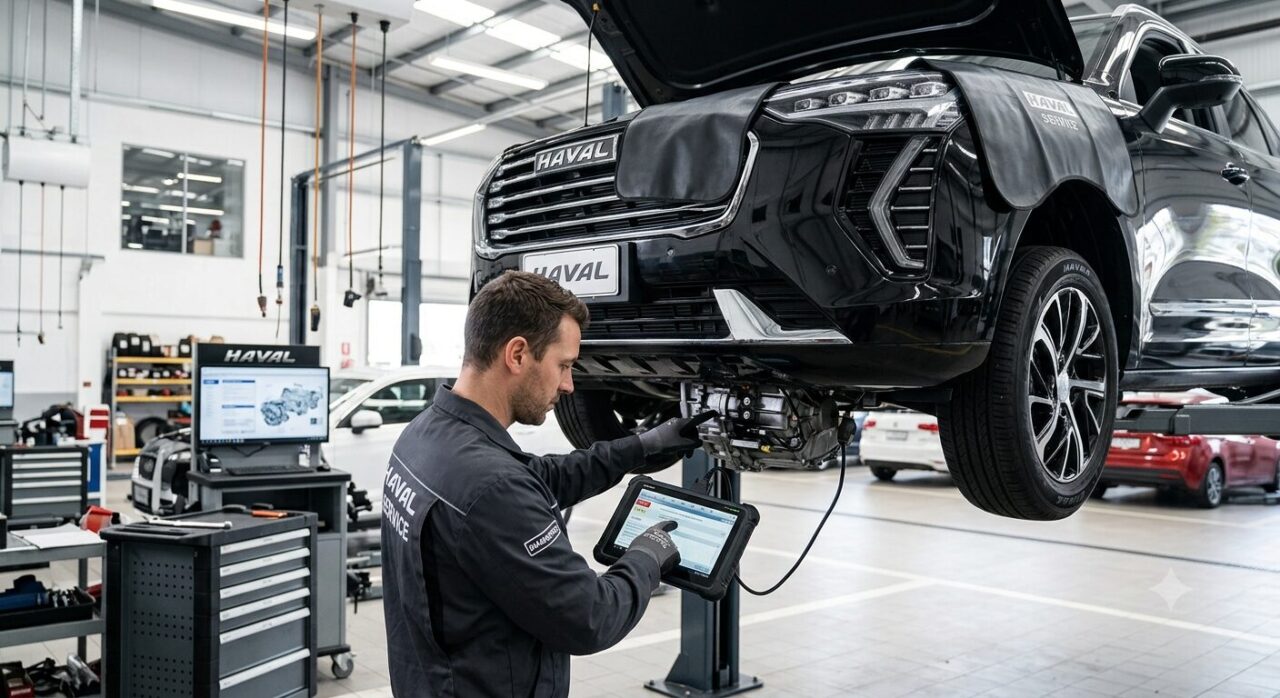
Plug a scanner into the diagnostic port (under the steering column) and read engine and transmission codes, fluid temperature and clutch parameters. This takes 5–10 minutes and points you in the right direction before any workshop visit.
Check for available software updates
Haval releases regular TCU firmware updates for the Jolion. Jerking, hesitation and rough shifts have all been improved through software revisions. Ask your Haval dealer to confirm you’re on the latest version — it’s typically covered under warranty at no cost.
Monitor transmission temperature
If the gearbox is regularly hitting 100–110 °C in traffic, check the transmission cooler, cooling lines and fluid level. A blocked cooler is one of the most common causes of recurring overheating.
Perform clutch adaptation
After a fluid change, repair or firmware update, clutch adaptation must be carried out. Without it, the gearbox will behave poorly even when all components are in good condition. This procedure requires a diagnostic tool — your dealer’s workshop can do it.
Fluid Change Intervals
✓ Workshop advice: Despite some dealers describing the 7DCT as a “sealed for life” unit, real-world experience tells a different story — especially in high-traffic, high-temperature environments. Regular fluid changes are the single most effective way to extend gearbox life.
Driving Conditions
Recommended Interval
Mostly motorway / highway driving
60,000 km (37,000 miles)
Mixed city and motorway
45,000–50,000 km (28,000–31,000 miles)
Predominantly urban stop-and-go
35,000–40,000 km (22,000–25,000 miles)
Hot climate + heavy urban traffic
30,000–35,000 km (19,000–22,000 miles)
Use fluid that meets Haval’s specification for the 7DCT. Non-approved fluids that don’t match the required specification can accelerate friction disc wear.
Signs of Clutch Wear and Mechatronic Failure
Clutch wear: burning smell after prolonged traffic driving, strong jerking on takeoff, slipping (revs rise but speed doesn’t follow), fault codes P17BF / P17D8, persistent overheating.
Mechatronic unit failure is the most expensive outcome. Symptoms include: limp mode activation, missing gears, repeated fault codes on the scanner, inability to engage Drive, and erratic unpredictable shifts. Repair or replacement of the mechatronic unit costs significantly more than keeping up with fluid maintenance.
How to Get the Most Life Out of Your Jolion’s Gearbox
Hold the car on the brake in traffic, not on the throttle. Using the engine to hold position keeps the clutches slipping and generating heat.
Avoid wheel-spinning and heavy towing. Prolonged clutch slip is the DCT’s main enemy.
Change the fluid on schedule — or earlier under the conditions listed above.
Keep the transmission cooler clean. Blocked cooler fins lead directly to recurring overheating.
Update the software at every scheduled dealer visit.
Don’t ignore dashboard warnings. Early diagnosis costs far less than a full repair.
✓ Expected lifespan: With regular servicing, on-schedule fluid changes and a sensible driving style, the Haval Jolion’s 7DCT can realistically cover 200,000–250,000 km (125,000–155,000 miles) without major overhaul.
Frequently Asked Questions
Yes. Mild shunting during low-speed takeoffs is a known characteristic of dual-clutch transmissions. It can reduce as the gearbox adapts to your driving style, and often improves after a firmware update. Sharp jerks that worsen over time are a reason to get the car diagnosed.
Yes. The marketing description doesn’t reflect real-world use. In urban conditions with frequent stop-and-go, the fluid degrades well before 60,000 km. Regular changes are the most cost-effective way to extend gearbox life and avoid expensive repairs.
During slow urban crawling the clutch packs are in near-constant slip, generating substantial heat. Holding the car on the brake — rather than balancing it on the throttle — is the simplest way to reduce transmission temperature in a queue.
Minor symptoms without a warning light can be tolerated briefly before a dealer visit. If the car enters limp mode, shifts are severe, the gearbox slips or overheats repeatedly, stop driving and arrange diagnosis. Delaying significantly increases repair cost.
In a significant number of cases, yes. Haval continuously refines the shift algorithms for the 7DCT. Many owners report noticeably smoother behaviour after an update at an authorised dealer — and the procedure is free under warranty.
With proper servicing and a calm driving style: 200,000–250,000 km (125,000–155,000 miles) or more without a rebuild. Aggressive driving, repeated overheating and skipped fluid changes can cut that figure in half.
Conclusion
The Haval Jolion’s 7-speed wet DCT is a modern, capable gearbox — but it rewards attentive ownership. The majority of issues owners encounter (jerking, rough shifts, overheating) aren’t signs of fundamental mechanical failure. They stem from heat build-up in urban traffic, outdated software, delayed fluid changes or missed clutch adaptation after service.
Reading fault codes early, keeping the firmware current and respecting the fluid change intervals go a long way toward avoiding costly repairs. At the first sign of unusual behaviour, don’t wait — a diagnostic visit while the problem is small is always cheaper than addressing it once it has grown.
“
Related Haval Jolion Articles
Looking for more information about Haval Jolion ownership, maintenance, troubleshooting, and vehicle settings? Explore our detailed guides, comparisons, and repair articles below:
Understanding your vehicle’s maintenance requirements, common issues, and advanced settings can help improve reliability, reduce ownership costs, and enhance your overall Haval Jolion driving experience.
📚 Источники
Материал подготовлен на основе официальной технической документации производителя, независимых исследований, отзывов владельцев, практики сервисного обслуживания и профильных автомобильных ресурсов. Все сведения актуальны на момент последнего обновления статьи.
Официальная документация производителя — руководства по эксплуатации, сервисные мануалы, технические бюллетени, каталоги оригинальных запчастей.
Независимые тесты и исследования — испытания автомобильных изданий, лабораторные исследования, экспертные обзоры, технические публикации.
Профильные форумы и сообщества — Telegram, Facebook, клубы владельцев, специализированные автомобильные форумы, обсуждения реальных случаев эксплуатации.
Практика сервисного обслуживания — опыт независимых сервисных центров, диагностика типичных неисправностей, анализ ремонтных кейсов, рекомендации специалистов.
Дополнительные источники — рыночная статистика, каталоги производителей комплектующих, открытые технические базы данных, нормативные документы (при необходимости).







38,000 km
Drive2.ru
45,000 km
Drom.ru
22,000 km
Telegram owners group
60,000 km
Drive2.ru
67,000 km
Drom.ru
78,000 → 95,000 km
Telegram owners group