Fast charging is one of the biggest advantages of an electric car. Instead of waiting several hours, a DC fast charger can add hundreds of kilometers of range in a relatively short time. For drivers who travel frequently, or who simply do not have convenient access to home charging, fast charging can be extremely useful — but is it safe to rely on it every single day?
In this guide
- What is fast charging?
- Does fast charging actually damage the battery?
- What large-scale studies actually show
- Real owners who fast-charge constantly — what they report
- The 80% rule, preconditioning and winter charging
- Best everyday charging strategy
- FAQ
- Sources
Can you charge an electric car with fast charging all the time?
The short answer is yes, you can. Modern electric vehicles are engineered to handle regular DC fast charging, and the largest real-world datasets collected so far back that up. However, the more complete answer is a little more nuanced: fast charging for every single session can contribute to somewhat faster battery aging, but how much depends heavily on charging power, battery chemistry, climate, and how long the battery sits at extreme states of charge.
Let’s look at what actually happens — and what owners who fast-charge every day are actually reporting.
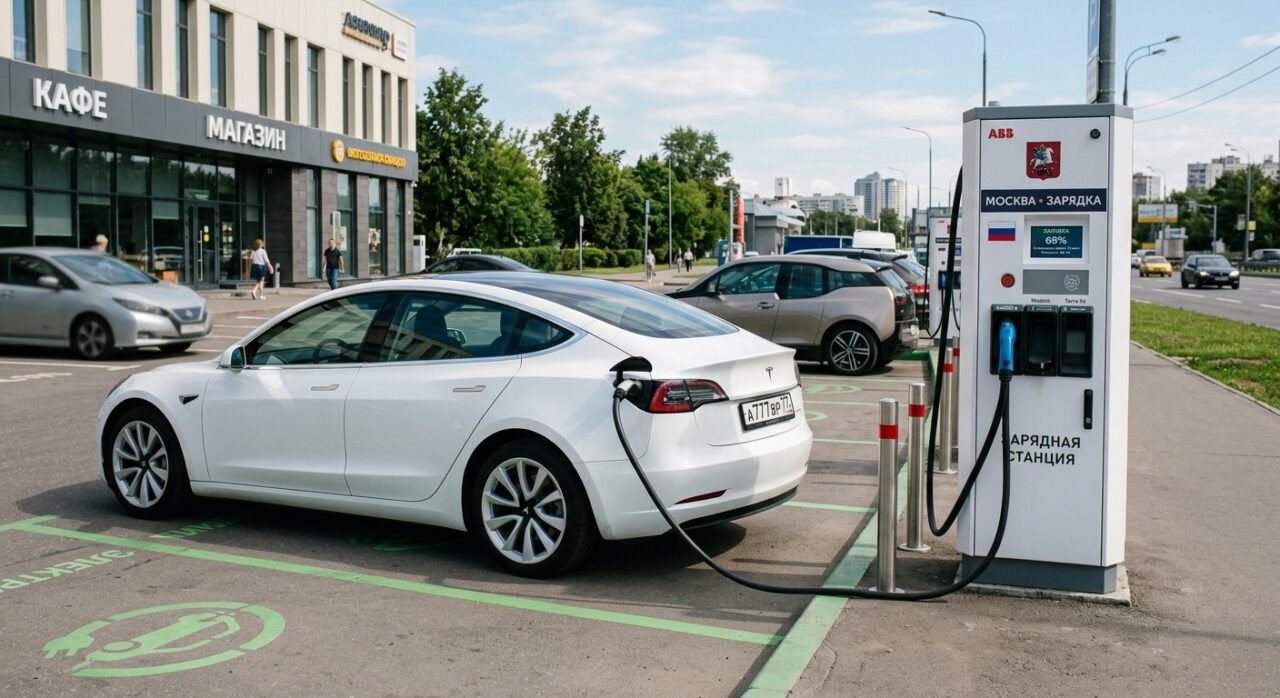
What Is Fast Charging?
There are two main types of charging used by electric cars.
AC charging is commonly used at home or at slower public charging stations. The electricity is converted from AC to DC by the vehicle’s onboard charger before it reaches the battery.
DC fast charging sends direct current straight to the battery, bypassing the car’s onboard AC charger. This allows much higher charging power — typically from around 50 kW up to 350 kW at the newest stations, with some upcoming platforms designed to accept even more.
The higher the charging power, the faster the battery can be replenished. But high charging power also means greater heat generation and greater electrochemical stress inside the battery — which is the root of every concern discussed in this article.
Does Fast Charging Damage the Battery?
The word “damage” can be misleading. Fast charging does not normally destroy a modern EV battery outright. The battery management system (BMS) is specifically designed to control charging current and protect the cells from unsafe conditions.
What fast charging can do is contribute to somewhat faster long-term degradation — the gradual, expected loss of usable capacity that every lithium-ion battery experiences over its life. A battery that started at 100% of its rated capacity might retain 90%, 80% or less after many years, depending on chemistry, climate and usage patterns. Fast charging is only one of several contributing factors, and — as the data below shows — often a smaller one than people assume.
Why Does Fast Charging Put More Stress on the Battery?
One of the main reasons is heat. When a large amount of electrical energy enters the battery quickly, the cells generate more heat, and elevated temperatures can accelerate the chemical side-reactions that age lithium-ion cells.
This is why modern EVs use increasingly sophisticated thermal-management systems. Depending on the vehicle, the battery can be actively cooled or heated during charging, and the charging system can automatically reduce power if the battery becomes too hot. Plug an EV into a 150 kW charger, and the car does not simply force 150 kW into the pack regardless of its condition — the vehicle decides how much power it will accept.
The Charger Doesn’t Decide Everything
A fast-charging station may be rated at 150, 200 or even 350 kW, but that does not mean the car will actually draw that much. The vehicle’s BMS constantly monitors:
- battery temperature;
- state of charge;
- cell voltage;
- charging current;
- overall battery condition;
- available power from the station.
Based on these parameters, the vehicle determines how much power it can safely accept — which is why the same charging station can charge two different electric cars at completely different speeds, and why the same car can charge at different speeds on different days.
Why Does Charging Slow Down Near 80%?
An EV usually charges fastest when the battery has a relatively low state of charge — many vehicles accept their highest power somewhere between 10% and 50–60%. As the battery approaches a higher state of charge, charging power decreases, sometimes sharply.
This is not a fault of the charger. It is a deliberate protective strategy: the final part of charging requires progressively more careful control of voltage and current, so charging from 80% to 100% can take disproportionately longer than charging from 10% to 80%. This is exactly why long-distance EV drivers commonly plan stops around 70–80% rather than waiting for a full charge.
Is 100% Charging Worse With Fast Charging?
It can be — but for a different reason than the charging speed itself. There are two separate stress factors: high charging power and high state of charge. Lithium-ion batteries generally experience more stress when they sit at very high states of charge for extended periods, regardless of how they got there.
That means repeatedly doing 10% → 100% on a DC fast charger is likely less battery-friendly, over the long run, than doing 20% → 80% on the same charger for routine use. This does not mean charging to 100% is forbidden — if you need the extra range for a trip, charging to full is completely reasonable. The main thing to avoid is leaving the battery sitting at 100% for long periods when you don’t need to.
What If You Have No Home Charger?
This is where the question stops being theoretical for a large and growing share of EV owners. A large share of urban and apartment-dwelling drivers have no driveway, garage or dedicated outlet, and depend on public charging almost entirely.
What the data on charger-less households showsA multi-unit-dwelling charging pilot run with EVgo found that nearly half of participating customers who lived in apartments or condos said DC fast charging was their primary way of powering their car, and most of that group had no home charging access at all. Drivers in multifamily housing were also far more likely than single-family-home owners to value fast chargers located close to home, and to use them more often as a result.
Modern electric cars are designed for regular fast charging, and manufacturers build in battery- and thermal-management systems specifically so that this use case works. If DC fast charging is genuinely your only realistic option, the honest answer — backed by the large-scale data discussed next — is that you can use it. The potential for a modest increase in long-term degradation is worth knowing about, but it should not be treated as a reason to avoid an EV altogether.
What Large-Scale Studies Actually Show
For years, this question was mostly answered with intuition and lab-scale cell testing. That has changed: several companies and research groups now track real-world telematics data from tens of thousands of vehicles, and the picture that emerges is more layered than either “fast charging is harmless” or “fast charging destroys batteries.”
Recurrent Auto: little difference in Tesla data
Battery analytics company Recurrent examined charging and range data from roughly 12,500–13,000 Tesla vehicles in the United States, comparing cars that supercharged more than 90% of the time with cars that did so less than 10% of the time. The company found the rate of range degradation to be virtually the same regardless of how often owners used DC fast charging, a result the researchers themselves described as more favorable than they had expected going in. Recurrent’s own writeup notes that this runs counter to what laboratory cell testing would predict, and flags that most of the vehicles in the sample are relatively young — so longer-term effects, if any, may not have shown up yet.
An independent review of the charging-degradation literature published in a peer-reviewed energy journal reached a similar note of caution: it found comparable degradation between Tesla vehicles fast-charged more than 70% of the time and those that were only slow-charged, describing the result as lower than researchers had anticipated — while also pointing out that controlled, long-term experimental studies on this exact question remain scarce.
Geotab: a measurable effect appears at fleet scale
A separate, much larger dataset tells a more nuanced story. Fleet-telematics company Geotab analyzed real-world battery health data from over 22,700 electric vehicles spanning 21 makes and models. The most recent analysis found an average annual degradation rate of 2.3%, and identified charging power as the single biggest factor behind faster-than-average aging. Vehicles that made heavy use of DC fast charging above 100 kW showed degradation of up to roughly 3.0% per year, compared with about 1.5% per year for EVs charged mostly below 100 kW — effectively double the rate.
Geotab’s researchers were careful to frame this as a trend rather than a cliff edge: degradation only accelerated meaningfully once a vehicle spent more than 80% of its time sitting at very high or very low states of charge, reinforcing that state-of-charge habits and charging power interact rather than acting independently. The dataset also showed that hot-climate EVs degraded roughly 0.4 percentage points faster per year than those in milder climates, though the researchers rated charging power as the larger overall factor.
Idaho National Laboratory: a modest gap after 50,000 miles
A controlled fleet study from Idaho National Laboratory compared EVs charged exclusively on Level 2 (AC) equipment against EVs charged exclusively on DC fast chargers over 50,000 miles of driving in hot-climate conditions. Vehicles charged only with Level 2 equipment lost about 24.5% of battery capacity, while those charged only with DC fast chargers lost about 27% — a real but fairly narrow gap, and one that researchers noted was recorded under an unusually harsh combination of heat and exclusively fast-charging behavior that few everyday drivers would replicate.
Real Owners Who Fast-Charge Constantly — What They Report
Aggregate statistics only tell part of the story. It’s also worth looking at what happens to individual, high-mileage vehicles that have relied on DC fast charging heavily in everyday use — while keeping in mind that any single car’s story is an anecdote, not proof, and can’t replace the large datasets above.
Uber-driven Tesla Model 3, ~255,000 miles (Australia)An independent repair shop technician who inspected a high-mileage, ride-share-driven Tesla Model 3 shared its battery statistics publicly after getting the owner’s permission. The car had used close to 50 megawatt-hours of energy over its life, with roughly 71% of charging coming from AC sources and about 29% from DC fast chargers, and the drivetrain and battery were reported to still be original at that mileage. The outlet covering the case noted this mixed but AC-majority charging pattern as one plausible reason the pack held up as well as it did.
Source: InsideEVs, “This Uber Tesla Model 3’s Battery Is Still Outstanding After 255,000 Miles” — insideevs.com
UberPeople.net forum thread — rideshare drivers on Tesla charging habitsIn a long-running discussion among rideshare drivers, members compared notes on Tesla Model 3 battery health at high mileage. One driver reported starting rideshare work around 32,000 miles and still seeing no measurable range loss roughly 30,000 miles later, while other participants in the same thread pushed back that heavier reliance on Supercharging versus home charging likely explained why some cars in the thread showed more degradation than others. The thread is a useful reminder that individual driver experiences on forums vary widely and are shaped by climate, mileage pace and charging mix — not just how often a fast charger was used.
Source: UberPeople.net, “Tesla Model 3 At 155K Miles: Battery Health And Maintenance Costs Revealed” — uberpeople.net
Tesloop long-distance taxi fleet, 200,000+ milesLong-distance shuttle operator Tesloop ran a Tesla Model S for over 200,000 miles with frequent fast charging to 100% and frequent deep discharging — a usage pattern most private owners would never replicate. The company reported only about a 6% loss in maximum battery capacity over that distance, along with no major mechanical issues, though a separate range-estimation software quirk that appeared at very high mileage was later corrected by Tesla with a firmware update.
Source: CleanTechnica, “Tesloop Ran Model S 200,000 Miles – What Did They Learn?” — cleantechnica.com
What About Battery Preconditioning?
Some modern EVs use battery preconditioning before DC fast charging. When the driver selects a fast-charging station as a destination in the navigation system, the car may automatically heat or cool the battery to an optimal temperature range before arrival. This can meaningfully improve charging speed and reduce unnecessary thermal stress, and both Recurrent’s and Geotab’s researchers list it among the most effective habits for limiting fast-charging-related wear.
Battery temperature is particularly important in cold weather. A cold battery may initially accept far less charging power, and the vehicle may spend some energy warming the pack before or during a charging session — one reason winter charging speeds are often noticeably slower than summer ones.
Does Fast Charging in Winter Damage the Battery More?
Not necessarily. The real risk is charging a very cold battery at high power without warming it first. Modern EVs are designed to prevent this by limiting charging current on a cold pack and, in many cases, actively warming the battery before fast charging begins. If a car automatically reduces power on a cold day, that is a protective measure, not a malfunction — and letting the vehicle’s preconditioning system do its job (rather than overriding it) is the single easiest way to reduce winter fast-charging stress.
What Is the Best Everyday Charging Strategy?
If the goal is to minimize long-term degradation while still using fast charging whenever it’s genuinely useful, the studies above point toward a fairly simple set of habits:
- Use AC charging when you have time. Overnight home or workplace charging is gentler on the battery and, per the data above, appears to be the single biggest lever available to owners who have the option.
- Use DC fast charging when you need speed. Road trips and time-pressed top-ups are exactly the use case fast charging was built for.
- Avoid parking at 100% unnecessarily. If your daily commute only needs 60%, there is little reason to charge to full every night.
- Don’t routinely run the battery near empty. There’s no benefit to habitually draining the pack before every charge.
- Let preconditioning do its job, especially in cold weather or before a fast-charging stop.
- Where possible, cap regular fast-charging sessions around 80%, saving 100% charges for days you actually need the extra range.
One concrete industry estimateAccording to figures published on Kia’s own owner-education materials and cited by AAA’s automotive research team, eight years of predominantly standard (AC) charging is expected to leave a battery with roughly 10% more remaining capacity than eight years of exclusively fast-charging the same vehicle — a useful order-of-magnitude figure, even though the exact number will vary by model and battery chemistry.
Chemistry and Technology Are Moving Fast, Too
Battery chemistry has a real effect on how much fast charging matters. Lithium-iron-phosphate (LFP) cells, now common in many Chinese-brand EVs and increasingly in global models, generally tolerate frequent full charges and fast charging somewhat better than nickel-manganese-cobalt (NMC) chemistries, though they are not immune to heat- and power-related stress either.
Battery makers are also actively working to shrink the gap further. In 2026, Chinese battery manufacturer CATL said its newest fast-charging cell chemistry was designed to retain around 80% of capacity after roughly 1,400 full charge cycles even at sustained high temperatures, and far more cycles under moderate conditions — though as with most manufacturer-published cycle-life claims, independent real-world verification at scale is still pending, and the company has not disclosed a production timeline.
Should You Stop Using Fast Chargers?
No. There is no good reason to avoid DC fast charging out of fear that every session is quietly wrecking the battery — the large-scale data simply doesn’t support that fear for typical driving patterns. If you’re traveling, fast charging is exactly what the vehicle was designed to support.
The more useful mental model is: AC charging for everyday use, DC fast charging for long trips and situations where you genuinely need to save time — and when fast charging, you usually don’t need to wait for 100% unless the extra range is actually required for the trip ahead.

The Bottom Line
So, can you constantly charge an electric car with fast charging? Yes. Modern EVs are designed to support regular DC fast charging, and the battery-management system actively controls power, temperature and voltage to protect the pack. Independent, large-sample studies show the resulting degradation is generally modest for typical drivers, though it becomes more measurable at very high charging power and with heavy time spent at extreme states of charge.
If your goal is to squeeze out every possible year of battery life, relying exclusively on high-power DC charging is not the ideal strategy — slower AC charging at home, when it’s available, remains the gentler everyday option. But if fast charging is your only realistic option, the evidence suggests you can use an EV with confidence rather than anxiety. Use fast charging when you need it, let the car manage the battery, and avoid parking for long periods at very high or very low states of charge.
FAQ
Yes. Modern EVs are engineered for regular DC fast charging, and large real-world datasets from companies like Recurrent and Geotab show that typical daily fast charging leads to only modest additional degradation for most drivers, especially at charging speeds below roughly 100 kW.
It can, but usually only slightly for typical use. Geotab’s fleet data found EVs relying heavily on charging above 100 kW degraded at roughly double the annual rate of EVs charged mostly below 100 kW, while Recurrent’s Tesla-focused study found little measurable difference — the effect appears to grow with charging power and with time spent at very high or very low charge levels, rather than being fixed.
Only when you actually need the range. Charging to 100% occasionally for a trip is fine; routinely charging to full and leaving the battery there adds unnecessary stress. Many drivers cap regular fast-charging sessions around 80%.
Not inherently — the real risk is charging a very cold battery at high power without preconditioning. Most modern EVs limit charging current automatically on a cold pack and can warm the battery ahead of a fast-charging stop, which is why letting the car’s preconditioning system run is recommended.
You can still own and rely on an EV. Data from multi-unit-dwelling charging pilots shows a large share of apartment-based EV owners already use DC fast charging as their primary method, and the same battery- and thermal-management systems that protect any EV apply equally to this use case.
Sources
Recurrent Auto — real-world fast-charging degradation research (Tesla fleet analysis)
Geotab — EV Battery Health Study press release (22,700+ vehicles, 21 makes/models)
geotab.com/press-release/ev-battery-health-degradation-fast-charging-study
Geotab — EV Battery Health blog analysis
Power Sonic — summary of Idaho National Laboratory 50,000-mile DCFC vs Level 2 fleet study
ScienceDirect — “Quantifying the degradation cost of frequent fast charging across multiple electric vehicle battery chemistries”
InsideEVs — 255,000-mile Uber-driven Tesla Model 3 battery report
insideevs.com/features/769019/tesla-model-3-255k-mile-battery
UberPeople.net — forum discussion, Tesla Model 3 battery health at 155K miles
CleanTechnica — Tesloop 200,000-mile Model S fleet report
cleantechnica.com/2016/09/30/tesloop-ran-model-s-200000-miles
UCLA Luskin Center — EVgo multi-unit-dwelling DC fast-charging pilot findings
AAA — EV battery life guidance, including Kia standard-vs-fast-charging longevity estimate
mwg.aaa.com/via/car/how-extend-life-electric-vehicle-batteries
Autoblog / InsideEVs (via AOL) — CATL 5C fast-charging cell longevity claims (2026)
A note on our sourcesFigures on this page come from published fleet-telematics studies, an independent controlled laboratory fleet test, a peer-reviewed literature review, and specific, named, linked owner and forum cases — not from anonymous social-media claims or unverifiable “leaked” documents. Manufacturer-published claims (such as CATL’s cycle-life figures) are labeled as such and have not yet been independently verified at real-world scale. We found no independently published, large-sample fast-charging degradation study specific to CIS or Latin American markets; that gap is noted above rather than filled with invented regional data.