Author: Automotive expert specializing in Chinese vehicles, with hands-on experience in diagnostics, maintenance, and real-world operation of ICE, hybrid, and electric models.
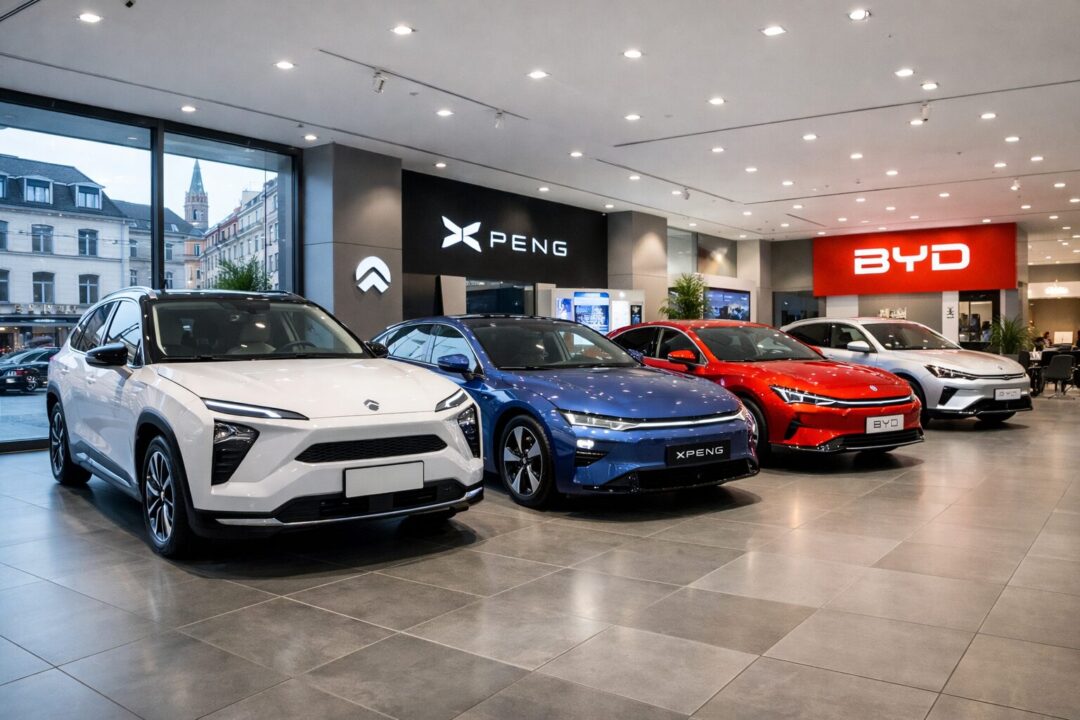
The year 2025 marked a pivotal moment for Chinese electric vehicles (EVs) in Europe, as manufacturers from the world’s largest EV producer continued to expand their footprint despite escalating trade tensions. Following the imposition of countervailing duties by the European Union in late 2024—ranging from 17% to 35.3% on top of the standard 10% import tariff—many analysts predicted a slowdown in Chinese EV imports. However, the reality proved otherwise: Chinese brands adapted swiftly by emphasizing plug-in hybrids (PHEVs) and hybrids, which faced lighter restrictions, and accelerating plans for local production. This strategic pivot not only sustained but accelerated growth, with Chinese automakers achieving record sales volumes and market shares across the continent.
Overall, Europe’s EV market saw robust expansion in 2025, with battery electric vehicles (BEVs) and PHEVs collectively reaching a 16-20% penetration rate in new car registrations, driven by stricter EU CO2 emission standards and national incentives. Chinese brands played a key role in this surge, capturing an estimated 7-11% of the total passenger car market and up to 13% in the hybrid segment. Global EV sales jumped 21% in 2025, with Europe contributing significantly through a late-year rebound after an early stall. Emerging markets outside Europe, such as Thailand and Singapore, also hit high EV adoption rates, but Europe’s mature infrastructure made it a prime battleground for Chinese expansion.
This article delves into the detailed sales statistics, top-performing brands and models, the impact of tariffs, localization efforts, regional variations, challenges faced, and future outlook for Chinese EVs in Europe. By analyzing data from sources like JATO Dynamics, Dataforce, and industry reports, we uncover how Chinese manufacturers are reshaping the European automotive landscape.
Chinese automakers more than doubled their European sales in 2025, with November alone seeing over 78,300 units sold—a 108% increase year-over-year. For the first 11 months, total sales approached 700,000 units, up from 408,000 in 2024, defying expectations amid tariffs. This growth propelled Chinese brands’ market share from around 2% in 2022 to 7% in the first half of 2025, with peaks at 7.4% in select months. In the hybrid vehicle segment, their share skyrocketed from 3% in October 2024 to 13% in October 2025, highlighting a successful shift away from pure BEVs.
Key Insight: The overall European car market grew modestly by 2.2% in November, but Chinese brands led the charge with triple-digit gains. For instance, BYD’s sales surged 230% in November, narrowing the gap with market leaders. This resilience stems from competitive pricing—Chinese EVs often undercut European rivals by 20-30%—combined with advanced battery technology and feature-rich interiors. Analysts project that by 2026, Chinese manufacturers could hold over 30% of Europe’s EV market, up from 8% in 2023.
Top Chinese Brands and Models Driving the Surge
Several Chinese brands dominated the European scene in 2025, with MG (owned by SAIC Motor) and BYD emerging as frontrunners. MG maintained its volume leadership, registering over 250,000 units through October, a 27% increase from 2024. Key models included the MG4 compact EV, which appealed to budget-conscious buyers with its 400+ km range and sub-€30,000 price tag, and the MG HS PHEV, a family SUV that ranked among the top PHEVs.
BYD, poised to overtake Tesla globally, saw explosive growth in Europe, with sales tripling in key months and exceeding 200% year-over-year in some periods. Standout models were the Seal U PHEV, Dolphin hatchback, and Atto 3 crossover, which collectively drove BYD’s volume gains. In August, Chinese brands even outsold Renault in Europe, with PHEV rankings featuring three Chinese models: BYD Seal U, Jaecoo J7, and MG HS.
Other notable players included Chery (through sub-brands Omoda and Jaecoo), Leapmotor, and Xpeng. Chery’s Omoda 5 and Jaecoo 7 PHEV gained traction in the mid-size segment, while Leapmotor’s T03 city car and C10 SUV targeted urban commuters. Xpeng focused on premium offerings like the G9 SUV, appealing to tech-savvy consumers with advanced autonomous features. Collectively, five brands—BYD, Jaecoo, Omoda, Leapmotor, and Xpeng—drove a 91% sales jump in the first half of 2025.
Globally, eight of the top 10 best-selling EVs in the first 10 months were Chinese, including BYD’s Song, Yuan, Dolphin, and Seagull, many of which found success in Europe. This dominance underscores China’s supply chain advantages, from battery production to cost efficiencies.
The Impact of EU Tariffs: Adaptation Over Adversity
The EU’s tariffs, aimed at countering alleged subsidies, were expected to slash Chinese EV exports by 25%. Yet, they backfired spectacularly, failing to curb the influx. Instead, Chinese sales boomed to projected 700,000 units in the EU and UK for 2025. Manufacturers pivoted to PHEVs and hybrids, which evaded the harshest duties, resulting in a 14-fold increase in PHEV registrations in some months. This shift not only maintained momentum but also pressured European automakers, who lobbied for relaxed EV mandates amid fears of losing ground.
🚗 Special Deals & Discounts
Latest prices on vehicles, spare parts and dealer promotions.
Experts note that tariffs moderately reduced BEV competitiveness but prompted retaliatory strategies, including potential minimum price agreements. China’s cost advantages—full industrial chains and economies of scale—ensured resilience, with EU tariffs unlikely to halt expansion. In response, the EU bent to automaker pleas, potentially delaying full EV transitions and allowing Chinese firms more time to entrench.
Brand
Key Models (2025)
Units (Jan-Nov)
Growth (YoY)
Core Strategy
MG (SAIC)
MG4, MG HS PHEV, ZS
250,000+
+27%
Market volume leader; strong presence in the UK.
BYD
Seal U PHEV, Dolphin, Atto 3
150,000+
+230%
Aggressive PHEV pivot & local production (Hungary).
Chery
Omoda 5, Jaecoo 7 PHEV
80,000+
+100%
Multi-brand strategy (Omoda/Jaecoo) for niche markets.
Leapmotor
T03, C10 SUV
50,000+
+150%
Stellantis partnership for EU distribution network.
Xpeng
G9 SUV, P7 Sedan
40,000+
+120%
Focus on premium tech & advanced ADAS software.
Localization of Production: A Game-Changer for Long-Term Growth
To bypass tariffs and build consumer trust, Chinese OEMs ramped up localization in 2025. BYD led with a new plant in Hungary, starting Dolphin Surf EV production by year-end, and plans for PHEV assembly in Turkey. Chery announced a facility in Spain, while SAIC explored partnerships in Italy and Poland. Europe and Southeast Asia emerged as primary hubs for Chinese overseas assembly, with nearly half of new plants located there.
This move not only reduces import costs but also creates jobs and integrates into local supply chains. For instance, Aiways’ $410 million deal with European partners aimed at localizing production by 2025, focusing on over-the-air (OTA) updates. Analysts predict that by 2030, localized production could account for 50% of Chinese EV sales in Europe, mitigating trade barriers.
Regional Trends and Variations
Growth was uneven across Europe. In the UK, Chinese brands like BYD used it as a gateway, with battery car sales catching up to European rivals. Germany, Europe’s largest market, saw strong PHEV adoption, while Nordic countries (Norway, Sweden) hit high EV shares—Norway aiming for 100% by 2025—favoring affordable Chinese models. Southern Europe, including Spain and Italy, benefited from new factories, boosting local sales.
In contrast, France and Eastern Europe lagged due to protectionist policies, but overall, incentives like subsidies accelerated uptake.
Challenges and Future Outlook
Despite successes, challenges persist: consumer skepticism about quality, limited charging infrastructure, and competition from legacy brands like Volkswagen and Renault. Political risks, including potential U.S. alignment on tariffs, loom large.
Looking ahead, 2026 promises further growth, with Chinese share potentially reaching 10-13%. Focus will shift to premium segments and NEVs, with hybrids bridging the transition. For Europe, this influx accelerates electrification but pressures domestic industries to innovate.
Comparative Table: Top Chinese EV Brands in Europe (2025 Estimates)
Data compiled from industry reports; actual figures may vary with final December data.
Conclusion
In 2025, Chinese EVs not only weathered EU tariffs but thrived, reshaping Europe’s automotive sector with innovative adaptations and aggressive expansion. From sales records to localization strategies, brands like MG and BYD demonstrated China’s prowess, offering consumers affordable, high-tech options while challenging established players. As the continent pushes toward net-zero, this influx could accelerate the green transition—but at the cost of heightened competition. With projections for even stronger growth in 2026, the era of Chinese dominance in European EVs is just beginning.
Forecast for Chinese EV sales in Europe in 2026
By 2025, Chinese brands have already captured about 7–8% of all new car registrations in the EU and 11–13% of the pure EV segment, with PHEVs reaching roughly 20% share for Chinese models. This growth is driven by BYD, Geely (including Pro, Star, Zeekr), SAIC, Chery and others, alongside partnerships with European OEMs like Stellantis and Ebro.
For 2026, analysts expect overall EV sales in Europe to grow at a slower, but still positive pace of about 14–16% year‑on‑year, down from the 30%+ spikes in 2023–2024. At the same time, plug‑in hybrids (PHEVs) are forecast to grow faster than pure BEVs, which benefits Chinese brands shifting more capacity toward hybrids to sidestep high EV tariffs.
Three likely scenarios for Chinese EVs in 2026
1. Conservative scenario
Chinese brands hold roughly their current level against a market growing at 14–16%. In this case, Chinese EV share in Europe rises to about 12–14% by the end of 2026, as long as tariffs and regulations do not tighten sharply.
2. Optimistic scenario
Chinese OEMs continue aggressive expansion:
Competitive pricing,
Deepening dealer networks,
Joint products with European brands,
Strong PHEV lines to bypass EV‑specific duties.
Then Chinese EV share could reach 15–18% of new EV registrations in Western Europe, especially in Germany, France, Spain and Italy.
3. Pessimistic scenario
The EU toughens tariffs, anti‑dumping measures and telematics/data‑privacy rules. Chinese brands still grow in PHEVs (already around 20–25% of that segment) but cannot match overall EV‑market growth.
In this case, Chinese EV share might flatline at roughly 10–12%, while their main gains remain in the PHEV space.
Key factors that will shape 2026
Level of tariffs and duties on Chinese EVs and batteries.
Local production (BYD, Geely, SAIC factories in Europe‑friendly countries).
Consumer shift toward PHEVs, where growth in 2026 may outpace BEVs (~35% vs ~28% for plug‑ins and pure EVs, respectively).
Recovery or continued slowdown of Tesla and traditional EU brands (VW, Renault, Stellantis), which either opens or blocks space for Chinese players.
Practical takeaway
Chinese EV brands are likely to keep growing in Europe through 2026, but at a slower clip than in 2023–2024.
A reasonable working estimate is:
“By the end of 2026, Chinese brands are expected to account for roughly 12–14% share of the European EV market, and around 8–10% of all new passenger cars, assuming tariffs and regulation remain broadly stable.”
The data and analysis in this article are based on reports from leading automotive analytics firms, industry associations, and reputable media outlets covering the European electric vehicle market in 2025. All figures reflect the latest available information as of late 2025 and may be уточнены in final year-end releases.
Primary data providers:
JATO Dynamics — monthly and half-year European registration reports, including market share, model rankings, and Chinese brand growth trends (2025 releases).
Dataforce — detailed sales data for Chinese brands in Europe, including brand-level volumes and market share milestones reported in 2025.
EV-Volumes — European and global EV sales statistics and market forecasts, including projected EV penetration rates for 2025.
ACEA (European Automobile Manufacturers’ Association) — official EU vehicle registration statistics, including BEV market share data.
Additional reports and analyses:
Rho Motion — analysis of EU tariff impacts, sales dynamics, and the shift toward PHEVs and hybrids.
Schmidt Automotive Research and Car Industry Analysis — projections for Chinese vehicle volumes in the EU and UK markets.
Reputable international media — Bloomberg, Reuters, Automotive News Europe, CleanTechnica — reporting on tariff effects, brand performance, and EV/PHEV market trends.