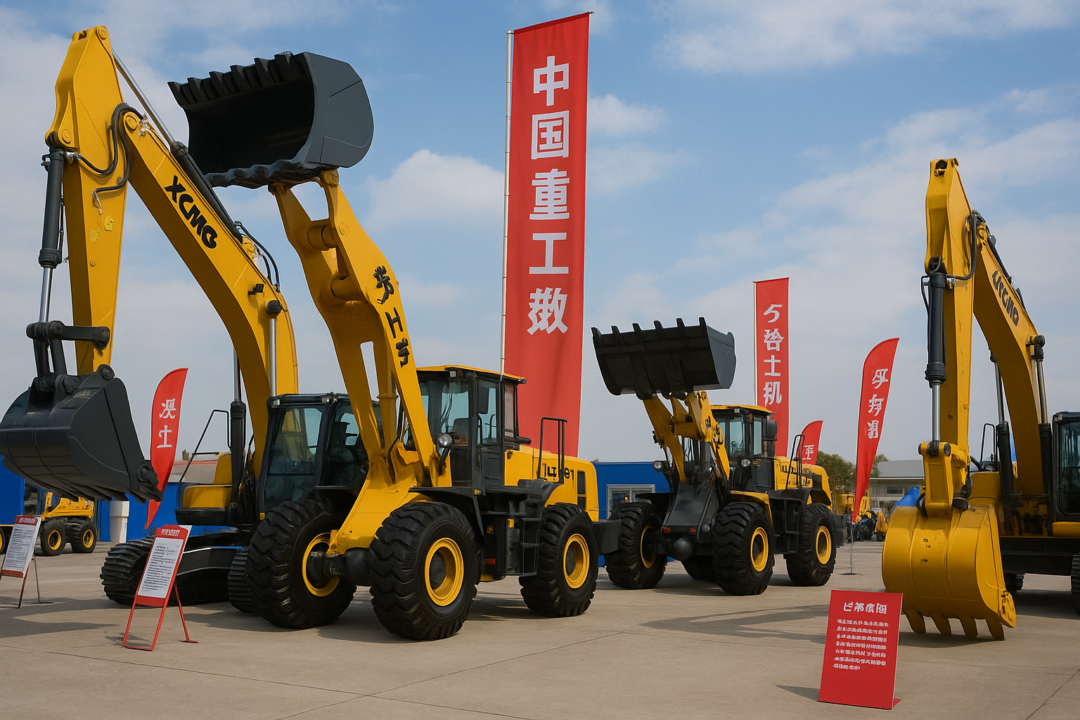
Chinese construction equipment, including excavators, loaders, and cranes, has surged in popularity across Asia, Africa, Latin America, and parts of Europe. Known for affordability and improving quality, brands like XCMG, SANY, Zoomlion, and LiuGong compete with Western giants like Caterpillar and Komatsu. But why is Chinese heavy machinery significantly cheaper? This article explores the key reasons behind their cost advantage, their growing reliability, and what buyers should consider.
Key Reasons for Lower Costs
1. Economies of Scale and Mass Production
As the world’s largest producer of construction equipment, China’s manufacturers operate at massive scale. This allows them to:
- Negotiate lower prices for raw materials and components.
- Spread R&D and overhead costs across millions of units.
- Run efficient, high-volume manufacturing plants.
Result: Reduced unit costs, making equipment more affordable.
2. Lower Labor Costs
Despite rising wages, Chinese labor costs remain lower than in Europe or North America. This translates to:
- Cheaper assembly and production processes.
- Competitive pricing for the final product.
3. Localized Supply Chains
Most components—hydraulics, engines, steel, and electronics—are sourced domestically, minimizing import costs and tariffs. Regional manufacturing clusters:
- Enable fast, cost-effective production of parts.
- Reduce logistics expenses by keeping suppliers close to assembly plants.
4. Government Support and Incentives
The Chinese government bolsters the industry through:
- Export tax rebates and low-interest loans.
- Infrastructure projects that drive domestic demand.
- Policies promoting automation and innovation.
These measures help manufacturers keep prices low while investing in quality.
5. Lean Branding and Marketing
Unlike Western brands like Caterpillar, Chinese companies focus less on:
- Expensive marketing campaigns.
- Premium showrooms or packaging.
Lower branding costs mean lower prices for buyers.
6. Simpler Designs for Budget Models
Budget-friendly Chinese machines often feature:
- Simplified controls and mechanical systems.
- Basic cabin interiors for cost savings.
Benefits:
- Easier maintenance in rugged conditions.
- Fewer electronics, reducing failure risks.
7. Focus on Price-Sensitive Markets
Chinese manufacturers target regions like Central Asia, Africa, Southeast Asia, and Latin America, optimizing equipment for:
- Affordability without high-tech frills.
- Easy access to low-cost spare parts.
8. Component Sharing and OEM Practices
Brands like SANY and LiuGong share components (e.g., Weichai engines, LKC hydraulics), which:
- Cuts development and production costs.
- Simplifies logistics and spare parts availability.
9. Shorter Product Lifecycles
Many Chinese machines are designed for 10–15 years of use, unlike Western models built for 30+ years. This allows:
- Use of lighter, cheaper components.
- Focus on affordability over over-engineering.
10. Flexible Emissions Standards
In non-OECD markets with less stringent regulations, Chinese equipment often uses:
- Older, cost-effective engine technologies (e.g., Tier 2).
- Fewer electronic controls, lowering production costs.
Note: Buyers in regulated markets (e.g., EU, US) should verify compliance with local standards.
Technological Advancements Closing the Quality Gap
Chinese manufacturers are investing heavily in R&D to rival Western brands:
- IoT and Telematics: Newer models feature remote diagnostics and predictive maintenance.
- Eco-Friendly Innovations: Hybrid and electric equipment cater to environmentally conscious markets.
- Global Collaborations: Partnerships like SANY with Putzmeister enhance technological capabilities.
High-end models from XCMG and SANY now match or exceed some Western competitors in performance.
Real-World Success Stories
- Kenya Road Project: A Kenyan contractor used XCMG excavators for a Belt and Road Initiative project, saving 30% compared to Japanese brands.
- Latin American Mining: A Peruvian mining company adopted SANY cranes, benefiting from reliable aftersales support and low costs.
These examples highlight how Chinese equipment delivers value in cost-sensitive regions.
Comparison: Chinese vs. Western Equipment
| Feature | XCMG XE215C | Caterpillar 320 | Komatsu PC210 |
|---|---|---|---|
| Price (USD) | $85,000 | $150,000 | $140,000 |
| Engine Power (kW) | 118 | 122 | 123 |
| Weight (tons) | 21.5 | 22.7 | 22.3 |
| Warranty | 2 years | 3 years | 3 years |
Key Takeaway: Chinese equipment offers significant savings with comparable specs for mid-level projects.
Global Dealer and Service Network Expansion
Chinese brands are improving aftersales support:
- SANY and XCMG have established service centers in Africa, Southeast Asia, and Latin America.
- Partnerships with local distributors ensure spare parts availability.
- Technician training programs enhance service quality in emerging markets.
Trade Policies and Tariffs
- Challenges: US tariffs on Chinese goods can increase costs in Western markets.
- Opportunities: Free trade agreements in ASEAN and Africa make Chinese equipment more competitive.
Buyers should factor in regional trade policies when budgeting.
Total Cost of Ownership (TCO)
While Chinese equipment has lower upfront costs, consider:
- Maintenance: Budget models may require more frequent repairs, though affordable parts offset costs.
- Tips for Savings: Regular maintenance and choosing modular designs reduce long-term expenses.
Debunking Myths
- Myth: Chinese equipment is low-quality.
Reality: High-end models from SANY and XCMG rival Western brands. - Myth: Support is limited.
Reality: Global service networks are expanding, though coverage varies.
Future Trends
Chinese manufacturers are poised for growth:
- Automation: Autonomous excavators and AI-driven cranes are in development.
- High-End Markets: Improved quality is driving expansion into Europe and North America.
- Challenges: Rising labor costs and supply chain disruptions may impact pricing.
What Buyers Should Consider
- Verify local spare parts availability and service quality.
- Review warranty terms and aftersales support.
- Match equipment to project needs (e.g., durability vs. cost).
Conclusion
Chinese construction equipment is affordable due to economies of scale, localized supply chains, government support, and smart design choices. With improving quality and global support, brands like XCMG and SANY offer compelling value for cost-sensitive markets. As innovation accelerates, Chinese machinery is set to dominate further.
Frequently Asked Questions (FAQ)
1. Why is Chinese heavy machinery cheaper?
Lower labor costs, domestic supply chains, and government subsidies reduce production costs.
2. Is Chinese construction equipment reliable?
Modern models are reliable for mid-level projects, with high-end options rivaling Western brands.
3. Are spare parts and servicing available?
Yes, via global distributors, though quality varies by region.
4. Can Chinese equipment handle long-term projects?
With proper maintenance, many models last thousands of operating hours.
5. How does fuel efficiency compare?
Newer models are efficient, but older ones may lag behind Western brands.
6. What financing options exist?
Chinese brands often offer leasing or partner with local banks in emerging markets.
7. Which brands are leading?
XCMG, SANY, Zoomlion, and LiuGong are globally recognized for quality and value.


