Author: Automotive expert specializing in Chinese vehicles, with hands-on experience in diagnostics, maintenance, and real-world operation of ICE, hybrid, and electric models.
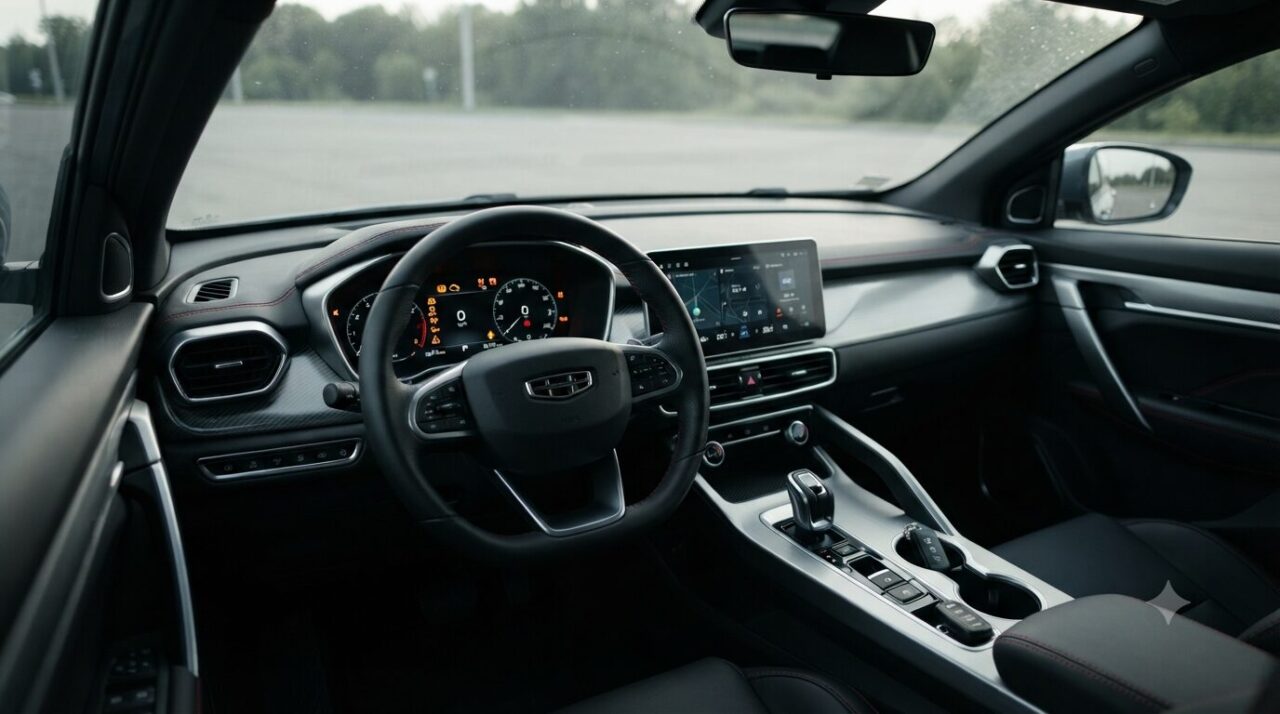
If the ABS and ESP warning lights come on together on your Geely Coolray’s dashboard, followed by a frozen infotainment screen or a blank rear-view camera, there’s no need to panic. In most cases this combination doesn’t point to one major failure but to several related, and quite fixable, causes — anything from low battery voltage to a corroded camera connector. Here’s what to do in each case, when a simple reset is enough, and when the car genuinely needs a workshop diagnostic.
The ABS (anti-lock braking) and ESP/ESC (electronic stability control) systems on the Coolray work as a pair: ESP relies on the same wheel-speed sensor data as ABS, and can brake an individual wheel within a fraction of a second when it detects an unstable situation. That’s why a fault in the ABS circuit almost always drags the ESP warning light along with it — both indicators come on together even though the underlying cause is a single one.
Cause
How it shows up
What to do
Low battery voltage
Warnings appear after a cold start or a long time parked, and may clear on their own
Check the voltage with a multimeter; charge or replace the battery if needed
Uneven tyre pressure
ABS/ESP misread the difference in rolling diameter as wheel slip
Equalise pressure across all four tyres to the manufacturer’s spec
Wheel-speed sensor fault
The code returns reliably after a reset, often on the same wheel
Inspect the sensor wiring and connector, replace if necessary
Corroded ABS connector under the bonnet
Lights stay on constantly or clear after a drive, then return
Inspect and clean the ABS module connector contacts
Software glitch in the control unit
Errors with no obvious physical cause; the check-engine light may clear after a battery disconnect
Clear the codes with a scan tool; have the firmware updated by a dealer if it recurs
Good to know
If the ESP light flickers briefly when pulling away on a slippery surface, together with a slight pulse in the brake pedal, that’s the system working normally, not a fault. The real warning sign is when the light stays on continuously — that means the system is disabled or not functioning.
How a weak battery triggers electronic error codes
The Coolray’s electronic modules — ABS, ESP, TPMS, infotainment — are highly sensitive to a stable onboard voltage supply. When voltage drops below the working threshold (typically caused by a weak or ageing battery, a poor charge from the alternator, or dirty terminal contacts), the control units can temporarily lose communication with each other over the CAN bus and log this as a fault, even though the sensors and actuators themselves are fine.
A telltale sign that the cause is electrical rather than mechanical is when several seemingly unrelated warnings appear at once: ABS, ESP, TPMS, and sometimes hybrid or electronic parking brake alerts too.
Check the battery voltageWith a multimeter, engine off: around 12.4–12.7 V is normal. Below 12.2 V, it’s worth recharging.
Inspect the terminalsCorrosion or a loose terminal clamp causes the same voltage drop as a discharged battery.
Start the engine and let it run for 10–15 minutesIf the warnings clear on their own, the cause was voltage-related rather than a faulty sensor.
Clear the codes with a scan toolRead and clear the codes via an OBD2 adapter (an ELM327, for example), then drive a few kilometres to confirm.
If the warnings return immediatelyThe battery isn’t the cause — move on to checking the specific sensor or connector, or book a dealer diagnostic.
Tip
It’s worth checking your battery’s condition before winter: in cold weather, a weakening battery triggers false ABS/ESP warnings far more often than it does in summer.
Infotainment freezes: how to reset it without a dealer visit
Head-unit freezes are one of the most widely discussed issues among Coolray owners. The system typically stalls for a few seconds or stops responding to touch entirely, without affecting any other part of the car.
Soft reset via the steering-wheel buttonHold the centre volume button on the steering wheel (not the up/down buttons) for 15–20 seconds — the screen will go dark and restart, with your settings preserved.
Confirm the fixIf the system runs stably for 10–15 minutes or longer afterwards, the issue is resolved — at least until the next occurrence.
Disconnect the batteryIf the soft reset doesn’t help, disconnecting the negative terminal for 5–10 minutes resets the state of most control modules, including infotainment.
Factory resetVia System → About System → Reset Settings. Note that this wipes saved radio stations, Bluetooth pairings, and personal preferences.
See a dealer for recurring freezesIf resets are needed more than once a month, a hardware fault or a firmware update is likely required.
One Coolray owner described, in a Russian-language Drive2 owner blog, that after fitting a wireless CarPlay adapter the system once stopped detecting the phone over either cable or Bluetooth — what fixed it was the steering-wheel reset, not reinstalling the adapter.
Paraphrased from a Geely Coolray owner’s post on Drive2.ru (Russian-language owner forum)
Another owner noted that disconnecting the battery’s negative terminal resolved most of their infotainment software glitches, including a missing on-screen driving-path overlay.
Paraphrased from a Geely Coolray owner’s post on Drive2.ru (Russian-language owner forum)
These accounts are paraphrased from publicly posted owner experiences on Drive2.ru, a Russian-language car-owner community, and are illustrative rather than verified individually.
Be cautious with third-party firmware
Unofficial head-unit firmware with bundled extra software is common in Coolray owner communities. Installing it can fix freezing issues just as easily as it can create new ones, and restoring factory firmware afterwards isn’t a free service at every workshop — weigh the risk before experimenting.
Rear-view camera not working: causes and how to check
Based on numerous accounts from owner forums, rear-view and 360-degree camera faults are among the most commonly reported electrical issues on the Coolray. The symptoms vary widely — from a fully black screen to an unstable, greenish-tinted image that cuts in and out.
Cause
Typical pattern
Dirty or fogged lens
Camera “goes blind” after rain or a wash; image looks blurry
Moisture in the connector or camera housing
Fault appears specifically after rain or a pressure wash
Pinched or worn wiring harness
Camera cuts in and out regardless of weather — several owners describe the Coolray’s wiring as notably thin
Corroded connector contacts
Intermittent dropouts that worsen over time
Software glitch in the 360-camera control unit
All cameras and parking sensors drop out together; a temporary head-unit reset often helps
Camera hardware failure
The fault persists through resets and factory resets — the module needs replacing
According to several owners’ accounts on Drive2, diagnosing this kind of fault is complicated by how intermittent it is: the camera often starts working again right around the time of the service appointment, leaving technicians unable to reproduce the fault and rebooking the customer for one or two weeks later. In one documented case, the actual cause turned out to be a pinched wire in the 360-camera harness, which was repaired without replacing the camera itself.
Inspect the camera lensWipe away dirt, snow, or ice, especially after a high-pressure car wash.
Restart the head unitVia the steering-wheel button or a battery disconnect — a portion of cases are resolved by a software reset of the 360-camera module.
Note the patternDoes the fault appear after rain, a wash, or driving over bumps? This information speeds up diagnosis at the workshop.
Check the camera connectorUsually accessible via the boot-lid trim; a technician can check it for corrosion and moisture.
Film the faultIf the camera fails intermittently, video evidence captured at the moment of failure is strong support for a warranty claim, since the fault itself may have cleared by the time you arrive.
If the camera is under warranty
Intermittent camera and parking-sensor faults on the Coolray are often accepted as warranty cases, but only with documented evidence — video, photos, or a written report. Insist that the fault is logged on the job sheet even if the camera happens to be working again when the car is handed over.
When you actually need a workshop
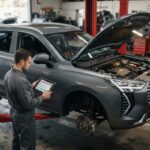
Self-diagnosis and resets solve a good share of these issues, but there are situations where it’s not worth delaying a workshop visit:
ABS/ESP warnings appear regularly rather than occasionally, and don’t clear after checking voltage and tyre pressure;
The car enters a limp-home mode (reduced power, speed limitation, or gear-shift restrictions);
The braking system or electronic parking brake itself stops working, not just its dashboard indicator;
Infotainment freezes more than once a week even after a soft reset and battery disconnect;
The camera or parking sensors drop out at the same time as faults in other systems — this can point to a wider onboard-network issue rather than one isolated component.
In these cases, a proper computer diagnostic reading fault codes through a dealer-level scan tool is needed — it captures more data than a consumer OBD2 adapter and can distinguish a software glitch from a genuine hardware failure.
Frequently asked questions
The most common causes are low battery voltage, a faulty wheel-speed sensor, or a software glitch in the control unit. Because ESP relies on the same sensors as ABS, a fault in one system almost always shows up as a warning in both.
Yes. In most cases, holding the centre volume button on the steering wheel for 15–20 seconds resolves it. If that doesn’t work, try briefly disconnecting the battery’s negative terminal, or perform a full factory reset through the system menu.
The main causes are a dirty or fogged lens, damaged or pinched wiring, a corroded connector, or a software glitch in the 360-camera control unit. Some owners consider the Coolray’s wiring harness a weak point, so mechanical damage to it is a common finding during diagnosis.
Yes. A drop in onboard voltage frequently triggers ABS, ESP, TPMS, and other electronic warnings simultaneously, even though the sensors and components themselves remain functional.
If the warnings appear regularly, the car enters limp-home mode, or the safety systems themselves stop working (not just their dashboard indicators), a proper computer diagnostic at a dealer is needed.
Related Geely Coolray Articles
Looking for more information about Geely Coolray ownership, maintenance, common issues, and comparisons? Explore our detailed guides and expert articles below:
Regular maintenance and early diagnosis of potential issues can help improve reliability, reduce repair costs, and keep your Geely Coolray performing at its best.
Author: Egor Bespalov — Mechanical Engineer, 10 years of experience with Chery, AvtoMir Service, expert on Chinese cars. Writes about repair, diagnostics, and ownership experience of Haval, Chery, Geely, and Changan models.