Author: Automotive expert specializing in Chinese vehicles, with hands-on experience in diagnostics, maintenance, and real-world operation of ICE, hybrid, and electric models.
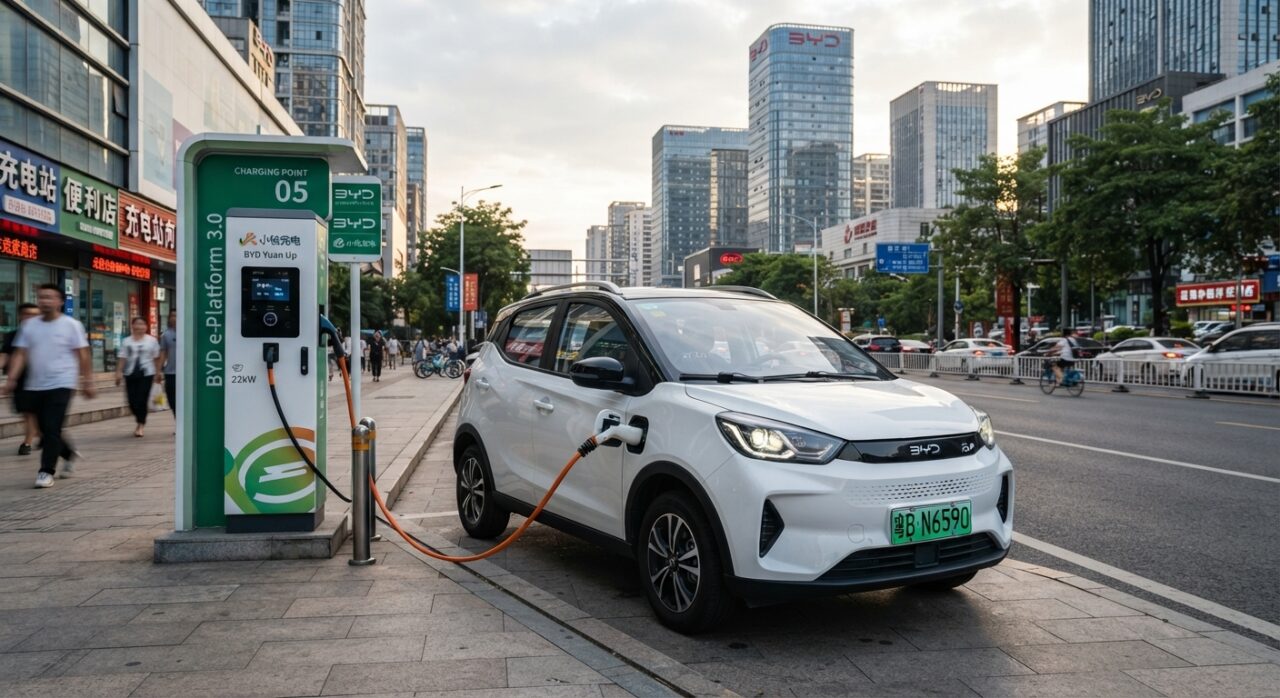
BYD doesn’t just sell cars — it sells its own battery technology, and it markets that technology almost as hard as the vehicles themselves. Here’s what actually sets Blade Battery apart, how it behaves in real winter conditions, whether the extended battery warranty applies to your car, and what independent testers and owners report once the marketing slides are put away.
🚗 Special Deals & Discounts
Latest prices on vehicles, spare parts and dealer promotions.
Blade Battery was launched by BYD in March 2020. It uses LFP — lithium iron phosphate — chemistry. Unlike the nickel-manganese-cobalt (NMC/NCA) chemistry used by many rivals, LFP contains no nickel or cobalt in the cathode material, which gives it notably better thermal stability.
The defining feature isn’t the chemistry alone, though — it’s the physical layout. Instead of packing in a large number of short cells, BYD uses long, flat cells (roughly 96 cm long and 9 cm wide) arranged in a dense array inside the pack, resembling blades stacked side by side. According to BYD’s own figures, this layout improves space utilisation inside the pack by more than 50% compared with a conventional LFP block arrangement.
The cells also double as structural elements, giving the pack significant mechanical rigidity, and in several models the battery is integrated directly into the vehicle’s body structure.
Why BYD chose LFP
Thermal stability
LFP is considered one of the most thermally stable lithium-ion chemistries in mass production. That doesn’t mean the battery can’t be damaged — it means the chance of an internal fault escalating into uncontrolled thermal runaway is lower than with nickel-rich chemistries.
Cycle life
For the first-generation Blade Battery, BYD claims a service life of more than 3,000–5,000 charge cycles depending on the version and market, equating to a theoretical lifespan of well over 1.2 million km. That’s a lab figure. Real-world longevity depends heavily on operating temperature, depth of discharge, charging power and how well the battery management system (BMS) does its job.
The nail penetration testBYD’s signature demonstration involves piercing a Blade cell with a metal rod to simulate a severe internal short circuit. BYD states that in this test the pack produced no smoke or open flame, with surface temperature staying in roughly the 30–60°C range. This is BYD’s own marketing test, not an independent certification, and it doesn’t mean the battery is impossible to damage — after a serious collision, a high-voltage pack still needs full diagnostic checks regardless of how it looks from outside.
What happens to the battery in cold weather — the claims and the independent testing
This is the question that matters most to buyers in cold-climate markets — Canada, the northern US, Scandinavia, and anywhere else winters bite. Cold weather raises internal resistance in any lithium battery, cuts available power, and slows how fast it can accept a charge. Expect slower charging, higher energy consumption, temporary power limiting, and a shorter indicated range in freezing weather — that’s normal battery behaviour, not a fault.
Rather than rely only on manufacturer claims, it’s worth looking at independent cold-weather testing. In the Norwegian Automobile Federation’s (NAF) annual El Prix winter range test — one of the most closely watched independent EV cold-weather benchmarks in Europe — the BYD Dolphin, which also uses a Blade LFP pack, lost about 20% of its advertised range in freezing conditions (roughly −2°C to −10°C), while that same year’s Tesla Model 3 Highland lost around 30%. Several other EVs in the same test — from Kia, NIO, XPeng, BMW and Lotus — did even better, losing only 12–14%.
Independent UK long-term testing of the BYD Atto 3 (the export name for the China-market Yuan Plus, which also uses Blade Battery) puts real winter range at around 190–210 miles from a 260-mile WLTP-rated 60.5 kWh pack — roughly a 20–25% drop from the official figure, in line with what most heat-pump-equipped EVs show in cold weather.
A note on Russian-language owner reportsBYD’s Blade-equipped models sell in large numbers in Russia and the CIS, where winters are considerably harsher than in most of Western Europe, so owner reports from that market are a genuinely useful data point — paraphrased here, not translated word-for-word, with links to the originals.
Russian-language source An owner of a BYD Song Plus EV (sold in most export markets as the Seal U / Sealion 6) reports real winter range holding at roughly 200–250 km at −15°C to −20°C, noting that road surface conditions and traffic — not just the cold itself — affect the final figure. Active battery preheating only kicked in a couple of times over the whole season, and charge level didn’t drop noticeably after several days parked in freezing temperatures. Paraphrased from a Drive2.ru post (Russian), BYD Song Plus EV community: drive2.ru/l/667055563703583677
Russian-language source Another owner, addressing common myths about LFP batteries in cold weather, notes that overnight in freezing temperatures the car lightly warms the battery — not to full operating temperature, just enough to avoid damage — which can use about 4% of the charge overnight. A fuller warm-up to operating temperature then happens on startup, which increases consumption in the first few minutes of driving. Paraphrased from a Drive2.ru post (Russian), BYD e2: drive2.ru/l/696283606426869922
Disclaimer on owner reportsThe passages above are paraphrased summaries of real owner posts, not direct quotes, and reflect individual experience in specific conditions (region, driving style, battery condition) rather than a guaranteed result for every BYD. Full original posts are linked at the source.
Should you charge a BYD to 100% every day?
LFP tolerates deep cycling well, but that doesn’t mean it’s ideal for the battery to sit at 100% constantly. At the same time, periodically charging to a high level is actually needed for the state-of-charge estimation system to stay accurate — LFP’s voltage curve is very flat through the middle of the range, so the BMS needs occasional trips to the top of the curve to recalibrate.
Practical guidance: charging to 100% before a long trip is fine. For daily driving, many owners and BYD’s own guidance point toward roughly a 20–80% range, unless the specific model’s manual says otherwise.
Blade Battery 2.0: what changed in 2026
On 5–6 March 2026, BYD unveiled the second generation of Blade Battery alongside its FLASH Charging system, rated at up to 1,500 kW. BYD chairman Wang Chuanfu explained that charging is deliberately capped at 97% rather than 100% — the last 3% of capacity is reserved for regenerative braking.
Blade Battery 1.0 vs Blade Battery 2.0 — per BYD’s own figures
~12 minutes — only about 3 minutes longer than at room temperature
Energy density
Baseline LFP blade cells
Claimed +5%, enabling 1,000+ km CLTC range on flagship models
Models fitted (as of March 2026)
Han, Tang, Seal, Dolphin, Atto 3 / Yuan Plus, Seal U / Sealion 6, and others
Yangwang U7, Denza Z9 GT, BYD Seal 07 EV, Sealion 06 EV, Song Ultra EV, Denza N9, Yangwang U8L, and others — mostly China-market and premium sub-brands at launch
Important caveatBlade Battery 2.0 and FLASH Charging specs apply to new 2026 models and require a compatible 1,500 kW charging station, which is essentially unavailable outside China at the time of publication (BYD’s first confirmed European FLASH-capable model is the Denza Z9 GT, with regional specs still pending). Applying “charges in 9 minutes” to older mass-market models like the Atto 3, Seal U or early Han generations is inaccurate — those run different battery hardware and charging electronics entirely.
Battery warranty: what actually applies to your car
In January 2026, BYD extended its Blade Battery warranty across Europe and the UK to 8 years or 250,000 km (155,000 miles), with a guaranteed minimum State of Health (SOH) of 70% — retroactively covering existing owners, not just new buyers. This sits alongside a 6-year/150,000 km basic warranty and a 12-year unlimited-mileage anti-corrosion warranty. The extension excludes vehicles used for ride-hailing or fleet services, and the BYD e-Truck ETP3.
This only applies if you bought through the official networkThe extended 8-year/250,000 km warranty is a regional programme tied to the market a car was officially sold into — currently confirmed for Europe, the UK and a small number of other markets through authorised BYD dealers. Cars bought through grey-market or parallel-import channels (common outside BYD’s official distribution footprint) typically fall under the warranty terms of whichever market the car was originally built for — which may be considerably less generous, or effectively unenforceable locally. Always confirm the warranty status of a specific car with the seller or importer before assuming the headline 8-year figure applies.
Real-world problems: what owners and independent shops actually find
To keep this from reading like a BYD press release, it’s worth showing the other side — real cases from long-term test fleets and independent service data.
Russian-language source Drom.ru’s long-term test fleet BYD Song Plus ran roughly two years without a single charging complaint before developing intermittent charging-session dropouts. A separate incident from the same long-term test: after a detailing session the car stopped responding to the start button entirely — which turned out to be a dead 12-volt auxiliary battery, not high-voltage pack degradation, triggering a cascade of false BMS, ABS and climate-control fault codes. Paraphrased from the “BYD Song Plus blog” series (Russian), Drom.ru: drom.ru/…/byd-song-plus-byd-102092.html and drom.ru/…/byd-song-plus-102387.html
Russian-language source Drom.ru’s writeup on a Song Plus fire examines a scenario where the BMS failed to register localised overheating in the impact zone from a collision, and recommends using a timer relay to cap home charging as an extra safety margin, independent of whether the electronics are functioning correctly. Paraphrased from “BYD Song Plus: the people’s EV caught fire” (Russian), Drom.ru: drom.ru/…/byd-song-plus-99500.html
Russian-language source Legal firm Saenko Group documents a case in St. Petersburg: a Song Plus buyer noticed self-discharge and slow charging within three months of ownership. The dealer initially blamed “improper use” and refused a repair, but an independent inspection confirmed a factory BMS defect, after which the dealer refunded the full purchase price. Paraphrased case summary (Russian), Saenko Group: saenko-group.ru
DisclaimerThese are individual documented cases, not fleet-wide statistics. They’re included to show that BMS-related fault codes are more often traced to the 12V auxiliary system, connectors or software than to catastrophic degradation of the Blade pack itself — but a factory defect or collision damage can’t be ruled out either, and any recurring fault codes should be diagnosed by a qualified technician rather than ignored.
Blade Battery’s real drawbacks
Strengths and limitations of Blade Battery
Factor
Strength
Limitation
LFP chemistry
High thermal stability, no nickel or cobalt
Lower energy density than NMC — for equal range, the pack is heavier or bulkier
Blade cell layout
+50% pack space efficiency
Body integration makes post-collision repair more complex
Cycle life
3,000–5,000+ cycles, SOH ≥70% guarantee
Warranty is tied to official market of sale — often doesn’t transfer with grey imports
Cold-weather behaviour
BMS preheats the pack when parked and before fast charging
Range and charging speed still drop noticeably in deep cold, especially on models without Blade 2.0
Bottom line
Blade Battery isn’t a “forever battery,” and it isn’t immune to problems. It’s a genuinely sophisticated system whose real-world lifespan depends on temperature, charging habits and how the car has actually been used. LFP chemistry and BYD’s cell layout do deliver a real advantage in thermal stability and longevity compared with many NMC packs, and the 2026 second generation addresses the technology’s biggest remaining weakness — slow cold-weather charging. But when buying a used BYD, what matters far more than the “Blade Battery” badge is the specific car’s service history, a proper BMS diagnostic check, and a clear answer on which warranty — if any — actually follows the vehicle.
Frequently asked questions
Occasionally, yes — it doesn’t harm an LFP battery and is actually needed from time to time to recalibrate the BMS. For daily driving, many owners stick to roughly a 20–80% range unless the owner’s manual for that specific model says otherwise.
Independent testing puts it at roughly 20–25% in freezing conditions for Blade-equipped models like the Dolphin and Atto 3 — better than some rivals (Tesla Model 3 Highland lost about 30% in the same Norwegian NAF test) but still a real drop. Slower charging and reduced power are normal in deep cold and don’t indicate a fault.
BYD claims over 3,000–5,000 charge cycles depending on the version, backed in Europe and the UK by an 8-year/250,000 km warranty with a guaranteed minimum 70% State of Health. Real-world lifespan still depends heavily on temperature, charging habits and how the specific car has been used.
No. LFP chemistry and the Blade cell design reduce the likelihood of damage escalating dangerously in tests like the nail penetration test, but that’s BYD’s own demonstration, not an independent safety guarantee. Any high-voltage pack needs a full diagnostic check after a serious collision.
Usually not automatically. The extended 8-year/250,000 km warranty is a regional programme for cars sold through BYD’s official dealer network in that market. Cars imported outside that network typically carry the warranty terms of their original market of sale instead, which can be less favourable or hard to claim locally — always confirm directly with the seller.
BYD Song Plus battery return case, St. Petersburg — Saenko Group (Russian-language): saenko-group.ru
avtomir.site Editorial Team. This article is based on manufacturer data, independent testing and media coverage, plus paraphrased summaries of real owner posts from Drive2 and Drom with links to the originals. Published: August 2026.
🔧 Need car repair or diagnostics?
Discounts on maintenance, diagnostics, and spare parts for Chinese cars at official dealers and trusted services.